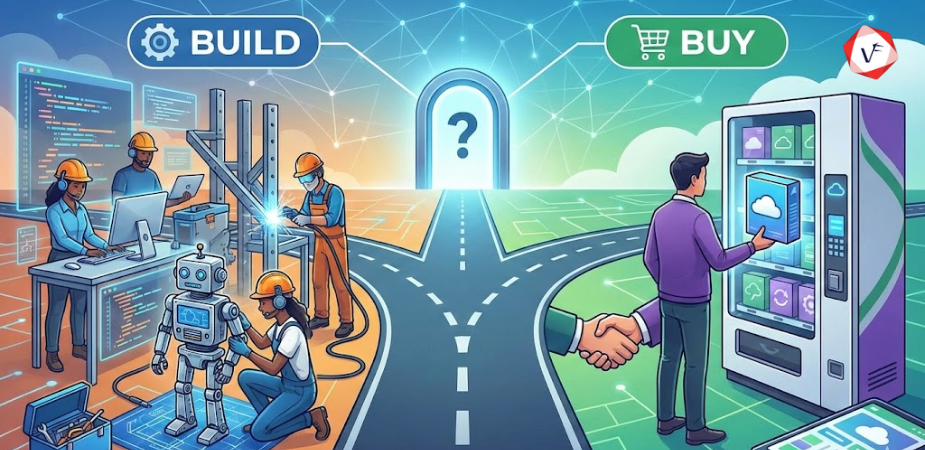
Quick Answer: Build custom software when you have unique workflows, complex integration needs, strict compliance requirements, or need long-term scalability and control. Buy off-the-shelf software when you need rapid implementation, have standard processes, limited budget, or prefer vendor-managed maintenance and updates.
Introduction
Organisations across industries depend on software to manage operations, support employees, and deliver services. As businesses expand, existing tools often become too limited or outdated to support new goals. At this stage, leadership teams must decide whether to build custom software or buy an existing solution.
This decision shapes long-term efficiency, operational flexibility, integration capabilities, and overall business performance. The following guide explains the differences between both approaches and outlines the factors that help determine the most suitable choice for an organisation.
Selecting the right software approach is a strategic decision that influences productivity, cost management, user experience, and long-term adaptability. Both custom-built and off-the-shelf solutions offer strong benefits, yet each comes with certain challenges.
The key is not to determine which option is universally better but to identify which one supports your organisation's current needs and future direction.
What Is Custom Software Development?
Custom software development involves creating an application tailored specifically for an organisation's processes, requirements, and long-term goals.
Such solutions can be built by:
- An in-house development team
- An external software development partner
- A hybrid team combining both
Custom software is designed around the exact workflow of the business, meaning the organisation does not need to change its processes to fit into a predefined product.
What Does "Build vs Buy" Mean?
The "build vs buy" decision compares two approaches:
Build
Creating a personalised solution from scratch that fits unique workflows, system architecture, and operational requirements.
Buy
Purchasing or subscribing to an existing software product with standard features and predefined capabilities.
Organisations choose between these options based on factors such as budget, complexity, urgency, integration needs, and long-term plans.
Advantages of Building Custom Software
1. Full Personalisation
Custom software is created specifically for your organisation's processes, ensuring a perfect fit without limitations or forced compromises.
2. Stronger Integration
It can be designed to integrate seamlessly with existing tools such as CRMs, ERPs, analytics platforms, and internal databases.
3. High Scalability
Custom software evolves with your organisation. New features and capabilities can be added when needed, without depending on vendor timelines.
4. Enhanced Security
Security protocols, data access controls, and compliance rules can be tailored to your industry's standards.
5. Ownership and Control
You control the roadmap, update frequency, user roles, data management, and future enhancements.
6. Long-Term Value
Although the initial investment may be higher, long-term ownership may reduce recurring subscription charges associated with third-party tools.
Limitations of Building Custom Software
1. Higher Initial Cost
Design, development, testing, deployment, and maintenance require significant upfront investment.
2. Longer Development Period
Creating a custom solution takes time. Depending on the complexity, projects can last months.
3. Expertise Requirement
A skilled team is essential to ensure proper architecture, coding standards, security measures, and long-term maintainability.
4. Ongoing Maintenance
Regular updates, performance improvements, and bug fixes are the organisation's responsibility.
Advantages of Buying Off-the-Shelf Software
1. Rapid Implementation
Since the software is already built, organisations can adopt it almost immediately.
2. Lower Initial Investment
Licensing fees or subscription plans are usually more affordable than custom development.
3. Pre-Configured Features
Most ready-made products include standard features that support common business operations.
4. Vendor-Managed Updates
Maintenance, bug fixes, feature improvements, and security patches are handled by the vendor.
5. Training and Support
Most providers offer documentation, tutorials, support teams, and community resources.
Limitations of Buying Off-the-Shelf Software
1. Limited Customisation
Standard software is built for a wide user base, making it difficult to customise deeply.
2. Integration Challenges
The software may not integrate smoothly with internal systems, leading to manual work or workarounds.
3. Long-Term Subscription Costs
Recurring payments may accumulate over time, especially as user count or features increase.
4. Vendor Dependency
Organisations rely on the vendor's update schedule, pricing model, and long-term product direction.
5. Potential Security Concerns
Data storage and usage policies depend on vendor practices and may not meet all compliance needs.
Factors to Consider Before Making a Decision
When deciding between building or buying software, organisations should evaluate the following:
1. Nature of Business Requirements
If workflows are unique or industry-specific, a custom solution may be a better match.
2. Budget Availability
Limited budgets may encourage buying, while strategic investments may justify building.
3. Time Constraints
If a quick implementation is necessary, off-the-shelf software may be more suitable.
4. Integration Needs
Complex or proprietary systems often require custom-built integrations.
5. Future Growth Plans
Software should support future expansion, new features, and increased users.
6. Security and Compliance
Industries with strict regulations may require custom-built security controls.
7. Internal Technical Capabilities
The presence or absence of a skilled development team influences the decision.
When Building Custom Software Is the Better Option
Consider building custom software if:
- Your workflows are unique and cannot be supported by standard tools
- You require complete control over features, updates, and data handling
- Integration with internal systems is complex
- You expect significant scalability in the future
- Long-term cost efficiency is important
- Security needs are specific to your industry
- You want to create a differentiated digital experience
Organisations in healthcare, logistics, finance, manufacturing, and niche sectors often choose custom development for these reasons.
When Buying Off-the-Shelf Software Is the Better Option
Buying is more suitable when:
- You need to implement a solution quickly
- Your operational needs are standard and not highly specialised
- Budget is limited
- You are not prepared to manage development and maintenance
- Existing market solutions already meet your needs
- You prefer vendor-managed upgrades and support
Off-the-shelf software works well for accounting tools, HR systems, CRM platforms, and general productivity applications.
Cost Considerations
Building Custom Software Includes:
- Development team costs
- UI/UX design
- Testing and quality assurance
- Infrastructure and hosting
- Security configurations
- Ongoing maintenance
Buying Off-the-Shelf Software Includes:
- Subscription or licensing fees
- Integration costs
- Add-on charges
- User onboarding and training
- Future price adjustments
In the short term, buying is generally more affordable.
In the long term, building may offer better value depending on usage and ownership.
Common Mistakes Organisations Make
1. Choosing Based Only on Cost
Focusing only on short-term cost often leads to long-term inefficiencies.
2. Ignoring Integration Requirements
Software that doesn't integrate well creates operational bottlenecks.
3. Underestimating Maintenance Needs
Custom software requires continuous attention to remain efficient and secure.
4. Not Considering Future Growth
Software must support expansion, new teams, and evolving processes.
5. Buying Without Proper Evaluation
Always test the software through demos or trial versions before purchasing.
Final Thoughts
The build-versus-buy decision depends on a clear understanding of organisational needs, resources, and long-term plans. Custom software provides flexibility, control, and scalability but requires investment and time. Off-the-shelf software offers convenience, speed, and lower upfront cost but comes with limitations in personalisation and integration.
The best option is the one that aligns with your operational structure, business goals, and future growth roadmap.
Need help deciding which approach is right for your organisation? Connect with Vofox Solutions, trusted software development company in india to discuss your custom software development needs and explore tailored solutions that drive business success.
Frequently Asked Questions
1. What is the main difference between building and buying software?
Building creates a personalised solution tailored to your specific workflows and requirements, while buying provides a ready-made product with standard features designed for a broad user base.
2. Is custom software always better?
Not always. Custom software is ideal for unique or complex workflows that off-the-shelf solutions cannot support. Standard business processes may be better supported by ready-made solutions that offer faster implementation and lower upfront costs.
3. What is the typical timeline for developing custom software?
Timelines vary based on complexity, features, and development resources. Simple applications may take 2-3 months, while complex enterprise systems can require 6-12 months or longer.
4. Can off-the-shelf software be customised?
Yes, but only within the limits allowed by the vendor. Most off-the-shelf solutions offer configuration options, integrations, and add-ons, but deep customisation is typically restricted.
5. Which option is better for long-term growth?
Custom software generally offers better scalability and flexibility over time, as it can evolve with your business needs without vendor constraints or licensing limitations.