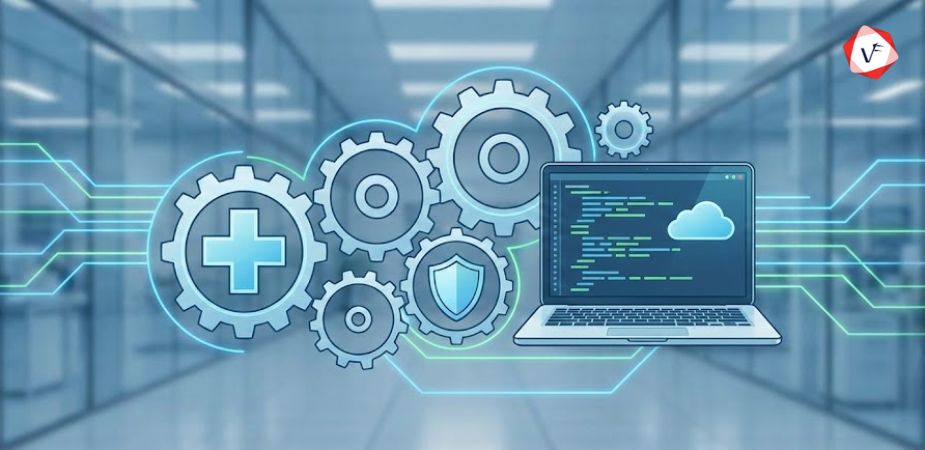
Quick Answer: Healthcare software development requires strict compliance with regulations like HIPAA, GDPR, and FDA guidelines. Best practices include secure architecture from day one, encryption at every layer, interoperability standards (HL7/FHIR), user-friendly design, continuous testing, and regular security audits. Key challenges include complex regulations, data security threats, and legacy system integration.
What Is Healthcare Software Development?
Healthcare software development involves creating applications, systems, and tools that support medical and healthcare operations. This includes:
- Electronic Health Records (EHR): Digital patient record management systems
- Telemedicine platforms: Virtual consultation and remote care solutions
- Patient management systems: Appointment scheduling and care coordination
- Medical device software: Software for diagnostic and monitoring equipment
- Health monitoring and wearable apps: Fitness trackers and health data collection
The goal is to improve patient care, streamline processes, and ensure data security. Healthcare software is highly sensitive because it deals with patient data and regulatory compliance, which makes quality, security, and accuracy critical.
Why Compliance Matters in Healthcare Software
Healthcare stands out as one of the most compliance-driven sectors globally. Compliance ensures that software adheres to legal, ethical, and security standards.
Key Reasons Compliance Matters:
Patient Data Protection
Regulations like HIPAA (US), GDPR (EU), and PIPEDA (Canada) ensure patient information is secure and private.
Legal and Financial Risk Management
Non-compliance can lead to lawsuits, fines, or license revocation.
Quality Assurance
Compliance ensures that software is reliable, safe, and meets healthcare industry standards.
Trust and Credibility
Healthcare providers and patients trust software that follows recognized standards and certifications.
Interoperability
Compliant software can integrate with other medical systems, making healthcare delivery seamless.
How Healthcare Software Development Works
Developing healthcare software requires careful planning, secure architecture, and continuous monitoring.
1. Requirements Gathering
Understanding the needs of:
- Doctors and healthcare staff
- Patients and caregivers
- Regulatory bodies
This step ensures that the software meets functional and compliance requirements.
2. Design and Architecture
Healthcare software needs:
- Secure architecture to protect sensitive data
- Modular design for scalability and integration
- User-friendly interface for non-technical medical staff
3. Development
Agile methodology is common for healthcare projects. Features are developed in sprints, allowing testing and compliance checks throughout.
4. Testing and Validation
Critical in healthcare software:
- Unit and integration testing
- Security testing for vulnerabilities
- Compliance testing against HIPAA, GDPR, or local regulations
- Performance testing to ensure reliability under load
5. Deployment and Maintenance
Healthcare software must be updated regularly for:
- Regulatory changes
- Security patches
- Feature improvements
Continuous monitoring ensures system reliability and data protection.
Key Best Practices for Healthcare Software Development
1. Prioritize Compliance from Day One
Plan software architecture around regulations like HIPAA, GDPR, or FDA guidelines. Compliance should not be an afterthought.
2. Secure Data at Every Layer
Use encryption, multi-factor authentication, and secure APIs. Safeguard data both during storage and transmission.
3. Implement Interoperability Standards
Standards like HL7 and FHIR allow systems to exchange medical data seamlessly.
4. Focus on User Experience
Doctors, nurses, and patients need intuitive and simple interfaces. Poor UX can lead to errors and inefficiencies.
5. Use Agile Development With Continuous Testing
Continuous integration and testing reduce bugs and ensure software remains compliant.
6. Plan for Scalability
Healthcare systems can expand in users and devices. Software should scale efficiently without compromising performance.
7. Maintain Audit Trails
Track all actions in the system to ensure accountability and compliance with regulations.
8. Regular Training and Documentation
Medical staff must be trained on software usage and security protocols. Proper documentation ensures smooth operations and compliance verification.
Common Challenges and Their Solutions
1. Complex Regulatory Environment
Challenge: Different regions have different rules.
Solution: Hire compliance experts and integrate standards into the software design from the start.
2. Data Security Threats
Challenge: Healthcare data is a prime target for cyberattacks.
Solution: Encrypt data, monitor activity, and perform regular security audits.
3. Integration With Legacy Systems
Challenge: Hospitals often have old systems that are difficult to connect.
Solution: Use middleware and standard APIs (HL7, FHIR) to enable smooth integration.
4. Maintaining Software Reliability
Challenge: Downtime can affect patient care.
Solution: Implement redundant systems, monitoring, and disaster recovery plans.
5. User Adoption Issues
Challenge: Healthcare staff may resist new systems.
Solution: Provide training, intuitive design, and support channels.
Key Benefits of Healthcare Software Development
Healthcare software is more than just a tool for digitizing patient records—it's a transformative technology that improves efficiency, compliance, patient care, and overall healthcare delivery.
Improved Patient Care
Healthcare software enables real-time access to patient records, medical histories, and diagnostic data. Doctors and nurses can make faster, data-driven decisions, reducing errors and improving patient outcomes. Features like clinical decision support systems (CDSS) help identify potential health risks, suggest treatment options, and ensure timely interventions.
Enhanced Data Management
Organizing vast amounts of patient data manually is prone to mistakes and inefficiencies. Healthcare software centralizes information in structured databases, enabling secure storage, quick retrieval, and seamless updates. This helps reduce redundancies, ensures consistent patient records, and improves communication among departments.
Regulatory Compliance
Compliance with healthcare regulations such as HIPAA, GDPR, and local health standards is critical. Software solutions are designed to enforce data privacy, audit trails, and secure access controls, ensuring that healthcare providers meet legal requirements. This reduces the risk of fines, penalties, or reputational damage.
Operational Efficiency
Automating administrative tasks such as appointment scheduling, billing, inventory management, and reporting frees up valuable time for staff. Doctors, nurses, and administrative personnel can focus more on patient care rather than manual paperwork, increasing overall productivity and reducing workflow bottlenecks.
Remote and Telehealth Capabilities
Modern healthcare software supports telemedicine, virtual consultations, and remote patient monitoring. Patients can receive care without visiting a hospital, while healthcare providers can monitor chronic conditions, track medication adherence, and respond quickly to emergencies, improving accessibility and continuity of care.
Cost Reduction
By optimizing operations, minimizing manual errors, and streamlining workflows, healthcare software reduces operational costs. Efficient resource allocation, automated billing, and minimized paperwork result in significant long-term savings for hospitals, clinics, and private practices.
Data-Driven Insights and Predictive Analytics
Analytics tools integrated into healthcare software allow providers to analyze trends, patient outcomes, and treatment effectiveness. Predictive analytics can anticipate patient risks, optimize staffing, and plan preventive care programs. These insights help in making strategic decisions and improving overall service quality.
Improved Patient Engagement
Many healthcare software solutions include patient portals and mobile apps, enabling patients to book appointments, access test results, receive reminders, and communicate with providers. Engaged patients are more likely to follow treatment plans, leading to better health outcomes.
Enhanced Collaboration Across Departments
A centralized software system ensures that departments such as radiology, pharmacy, lab, and administration can work together efficiently. Shared access to data reduces miscommunication, speeds up diagnosis and treatment, and promotes a coordinated approach to patient care.
Scalability and Adaptability
Healthcare software can be scaled to accommodate growing patient populations or new healthcare services. Cloud-based solutions offer flexible infrastructure that adapts to evolving needs without significant additional investment.
Future Trends in Healthcare Software Development
AI and Machine Learning
Predictive analytics, diagnosis assistance, and personalized treatment plans powered by artificial intelligence.
Telemedicine Growth
Virtual care platforms will continue to expand, requiring scalable, secure software solutions.
Wearable Integration
Integration with fitness trackers, smartwatches, and IoT medical devices for continuous health monitoring.
Cloud-Based Healthcare Solutions
Cloud enables scalability, remote access, and cost-effective infrastructure for healthcare providers.
Blockchain for Medical Data
Blockchain ensures data integrity and secure sharing between institutions while maintaining patient privacy.
Patient-Centered Platforms
Apps and portals focused on patient engagement, appointments, and personalized health insights.
Frequently Asked Questions
1. What regulations should healthcare software comply with?
Healthcare software must comply with HIPAA (US), GDPR (EU), PIPEDA (Canada), FDA guidelines, and ISO 13485 for medical devices, depending on the region and application type.
2. Why is compliance critical in healthcare software?
Compliance protects patient data, reduces legal and financial risks, ensures software quality and reliability, and builds trust with healthcare providers and patients.
3. How do developers ensure healthcare software is secure?
Security is ensured through encryption, multi-factor authentication, secure APIs, penetration testing, regular security audits, and continuous monitoring of system vulnerabilities.
4. Can legacy hospital systems be integrated with modern software?
Yes, legacy systems can be integrated using APIs, middleware solutions, and interoperability standards like HL7 and FHIR that enable seamless data exchange.
5. What is the biggest challenge in healthcare software development?
The biggest challenge is balancing compliance, security, and usability while ensuring the software is scalable, reliable, and meets evolving regulatory requirements.
Conclusion: Building Compliant and Effective Healthcare Software
Healthcare software development is complex, highly regulated, and critical for patient care. Compliance and best practices ensure software is secure, reliable, and efficient.
Key Takeaways:
- Plan compliance and security from the start
- Prioritize usability and patient-centered design
- Use modern architectures for scalability and integration
- Continuously monitor, update, and audit systems
- Implement interoperability standards (HL7, FHIR)
- Maintain audit trails and documentation
By following these practices, healthcare providers can build software that improves patient care, streamlines operations, and remains compliant with global standards.
The future of healthcare software lies in AI, telemedicine, wearable integration, and cloud-based solutions, making compliance, security, and best practices more important than ever.
Need expert guidance in developing compliant healthcare software? Connect with Vofox Solutions to discuss your healthcare software development needs and explore HIPAA-compliant solutions tailored to your requirements.