- September 09, 2026 2:34 pm
- September 09, 2026 2:34 pm
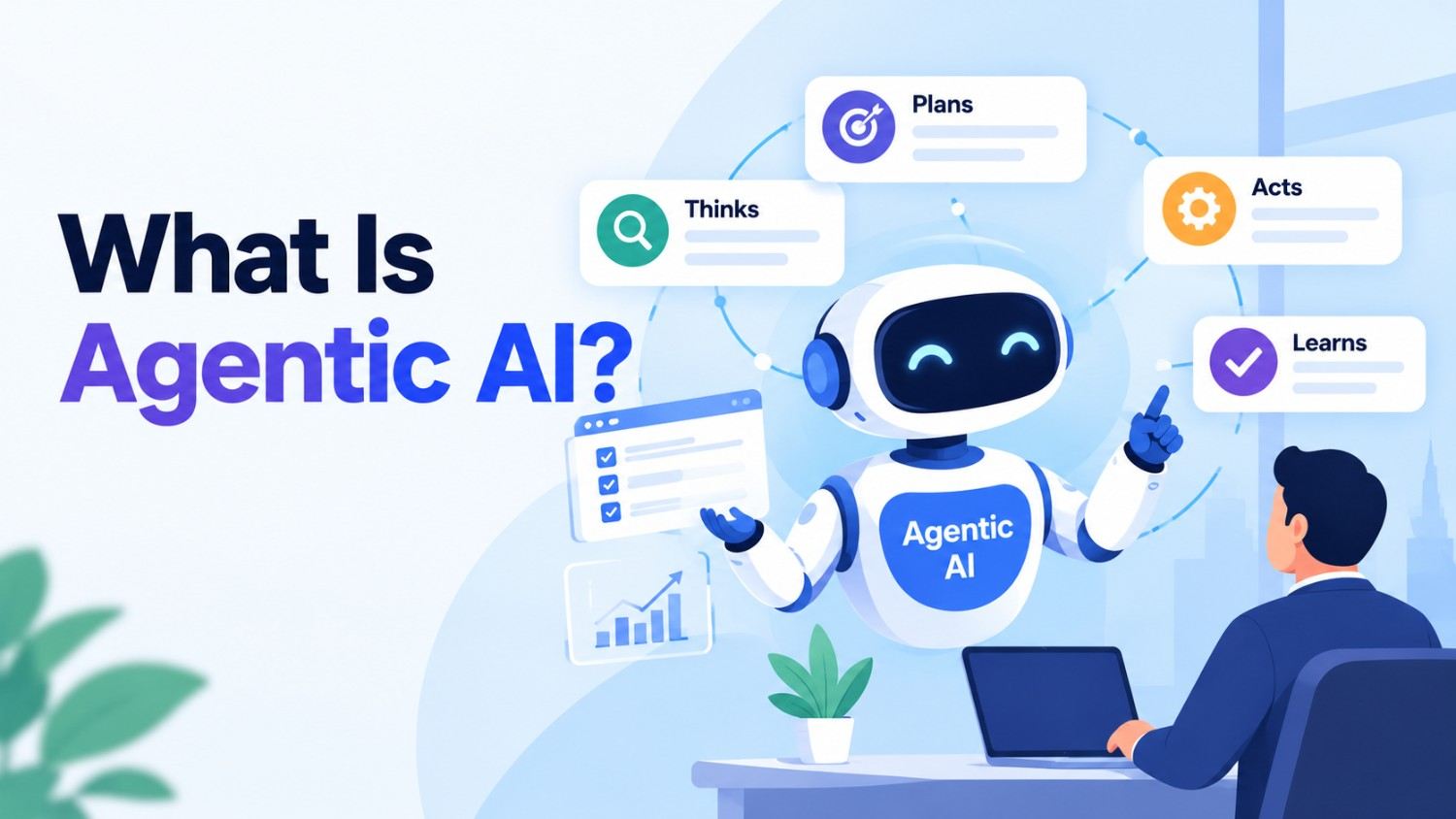
Companies have already adopted and experimented with AI trends. Many of them have introduced AI chatbots, content generators, or predictive analytics tools to ease their daily business process. But what these tools still lack is the capability to act on their own. Even after all the advancements, many of these systems often need a human to review outputs, trigger the next action, or connect one process or workflow to another. And with time and market needs, the gap between "AI that suggests" and "AI that acts" widens and this is exactly where the Agentic AI comes in.
Agentic AI is becoming one of the serious topics of discussion among the leadership teams planning their next technology investment. If you're analyzing the pros and cons of agentic AI for businesses, then this guide breaks down what Agentic AI is, how it works, and why it matters for decision-makers who are keen to invest in the right technology.
Agentic AI is an AI system that can plan, decide, and execute tasks that have multiple steps with limited human intervention. Unlike traditional AI tools that respond to a single prompt and perform the task, agentic systems are built to work around a particular goal. These agentic systems are capable enough to break a single task into smaller steps, using tools or software systems along the way, and adjust their approach based on the results they receive.
Let's take a simple example: a generative AI tool can help you draft a professional email for your customer with the right prompt. But with an agentic system, you can easily send a personalized email. The system will automatically monitor the customer's raised ticket, analyze the order history, check the data from the CRM, draft an appropriate message, and send it to the correct customer. It doesn't need human involvement at each step to configure the right response.
This is the main reason why there's growing interest in agentic AI for businesses. It shows a transition from AI as a mere assistant to AI as an operator that can handle even complex, predefined workflows under the right guardrails. One thing is worth mentioning: agentic AI is not a framework to replace human judgment on complex or high-risk decisions. It will be advantageous to use agentic AI systems on structured, repeatable business processes where there are set standards, known rules, and measurable outcomes. Businesses that treat it as an autonomous decision-maker without human oversight on complicated and unclear problems may cause unnecessary trouble and may find it more expensive to resolve.
Agentic AI systems are typically developed around four capabilities: Reasoning, memory, tool use and autonomous action. Understanding each one can align your expectations from an Agentic AI implementation.
Reasoning and planning form the foundation. The system takes a goal, for instance “resolve this invoice difference” and breaks it into a sequence of smaller tasks. It doesn't need a human to map every step; the underlying model figures out a plan based on the goal and the tools available to it.
Memory allows the system to retain the context of a query across steps and, in more advanced setups, across sessions. This is beneficial for many business use cases as many workflows aren't complete in a single turn. A procurement agent, for example, needs to remember earlier vendor responses while negotiating terms over several exchanges.
Tool use is what separates agentic AI technology from a standard language model. These AI systems can easily call APIs, query databases, trigger software functions, or interact with existing business applications, such as CRMs, ERPs, ticketing systems, and internal dashboards. This is the layer that turns “the AI understands the task” into “the AI actually completed the task.”
Autonomous action with feedback loops is the last but the most interesting capability. The system executes a step, analyses the result, and decides whether to proceed, retry, or escalate to a human. This feedback loop is what allows agentic AI for businesses to handle exceptions reasonably well, rather than breaking the moment something doesn't go exactly as planned.
In practice, most enterprise implementations also include human checkpoints like approval gates before financial transactions, or review steps before customer-facing communication goes out. This hybrid model, where the agent handles the routine work and a person signs off on anything with real consequences, is where most successful agentic AI development projects land today.
The appeal of agentic AI for businesses comes down to a fairly simple equation: fewer manual handoffs, faster cycle times, and more consistent execution on tasks that used to require constant human attention. Here are the benefits of using agentic AI technology in business:
Operational efficiency: This is one of the most important gains businesses notice. With agentic AI development, multi-step business processes like invoice processing, employee onboarding, or IT ticket triage run with less manual coord ination.
Faster response times: For certain businesses like retail and e-commerce, prompt action often decides whether a customer stays, or a fraud attempt gets caught in time. Customer service, fraud detection, and order management workflows benefit from agents that act in real time rather than wait in a queue for human review.
Reduced error rates:Manually logging data often introduces inconsistencies that can turn into a huge issue if left unchecked over time. Agentic systems follow a defined logic and cross-check data across diverse systems, which reduces the errors that come from manual data entry or fatigue-driven mistakes.
Scalability without proportional headcount growth: After a point, companies expand faster than their teams can keep up, and every technology investment needs to account for that curve. A thoroughly designed agent can easily handle a growing transaction volume without requiring the business to hire at the same rate, which matters for cost control during growth phases.
Better use of existing or legacy systems: To manage daily operations, employees often juggle multiple tools that may not be integrated properly, which slows work down and creates data silos. Agent AI systems easily connect to CRMs, ERPs, and internal tools rather than replacing them, businesses get more value out of software they've already invested in.
Improved decision support: Business decisions often come with incomplete information gathered under time pressure. Agents gather and synthesize data from multiple sources before a human makes the final call, which cuts down research time significantly.
None of this comes automatically. The benefits show up when the agent is correctly scoped, integrated with clean data, and monitored over time. This is usually where working with an experienced agentic AI development company makes a measurable difference, particularly for businesses without in-house AI engineering talent.
**NOTE:** There are also limitations worth factoring into any business case. Agentic systems need well-defined guardrails, ongoing monitoring, and periodic retraining or tuning as business processes change. Security and access control matter more here than with a typical chatbot, since these agents often have permission to act on live systems and real data. Budgeting for that oversight, rather than treating the agent as "set and forget," is part of realistic planning.
For most successful organizations, the right way to adopt Agentic is not through a company-wide rollout from day one. It should start with identifying one or two high-friction repeatable workflows like vendor onboarding, expense approval, and piloting an AI agent there. This will provide a clear idea on how and where it can be used before the business expands the scope, and it surfaces integration issues or data quality problems while they're still manageable. Implementing an Agentic AI for businesses is not a random trend that you can watch from sidelines, but it's not only something you can easily adopt. It needs proper planning, and companies achieve real value when they pair the technology with clear process design, sensible guardrails, and a partner like Vofox who understands both the development and business sides.
Q1.What is Agentic AI in simple terms?
Agentic AI is an AI system that can easily carry out multi-step tasks on its own such as planning what needs to happen using software tools to get it done and adjusting with the way instead of analyzing the existing generic data or information to a single query or a prompt.Q2.What is the difference between Agentic AI and Generative AI?
Generative AI creates often content like images, audios, videos, text, or code in response to prompts, and then it stops. On the other hand, Agentic AI works in a different way that too with minimal human input during the task completion. Agentic AI technology goes further: it can take a goal, break it into multiple steps, use apt business tools or systems to complete those steps and keep going until the task is finished.Q3.How can businesses use Agentic AI?
Common Agentic AI use cases include customer support automation, invoice and procurement processing, IT ticket triage, fraud monitoring, employee onboarding, and supply chain coordination. Any workflow with repeatable steps and clear rules is a reasonable candidate for agentic AI for businesses.Q4.What are the benefits of Agentic AI for businesses?
The main benefits of Agentic AI development are the reduced manual work, faster turnaround on multi-step processes, fewer data-entry errors, better scalability without linear headcount growth, and more efficient use of existing business software. But you must be mindful in certain areas: these systems need proper oversight, security controls, and monitoring to deliver that value consistently.Q5.How can a business implement Agentic AI?
Implementing an Agentic AI should be a thoughtful investment. Start with a simple, well-defined workflow rather than a broad rollout. Map out the process, identify which systems the agent needs to access, set clear approval checkpoints for high-risk actions, and measure results before expanding. Partnering with a dedicated and trustworthy agentic AI development company like Vofox can bring real growth with less risk.Amal V Nair is an AI Engineer interested in exploring how artificial intelligence can solve real world problems. He focuses on understanding emerging AI technologies, their practical applications, and the challenges involved in implementing them. Through his technical insights, he aims to help readers understand AI concepts and make informed decisions about adopting AI solutions.
Guaranteed Response within One Business Day!

Why the PHP2Shell Alert Makes Choosing the Right PHP Development Company More Important Than Ever
How AI-Powered UX Design Improves User Experience
When to Choose Node.js and When to Choose PHP for Your Project
How to Choose the Best Flutter App Development Company for Your Business
Key Benefits of Hiring a Flutter App Development Company in India

Guaranteed Response within One Business Day!