- May 15, 2026 2:48 pm
- by Deepthy
- May 15, 2026 2:48 pm
- by Deepthy
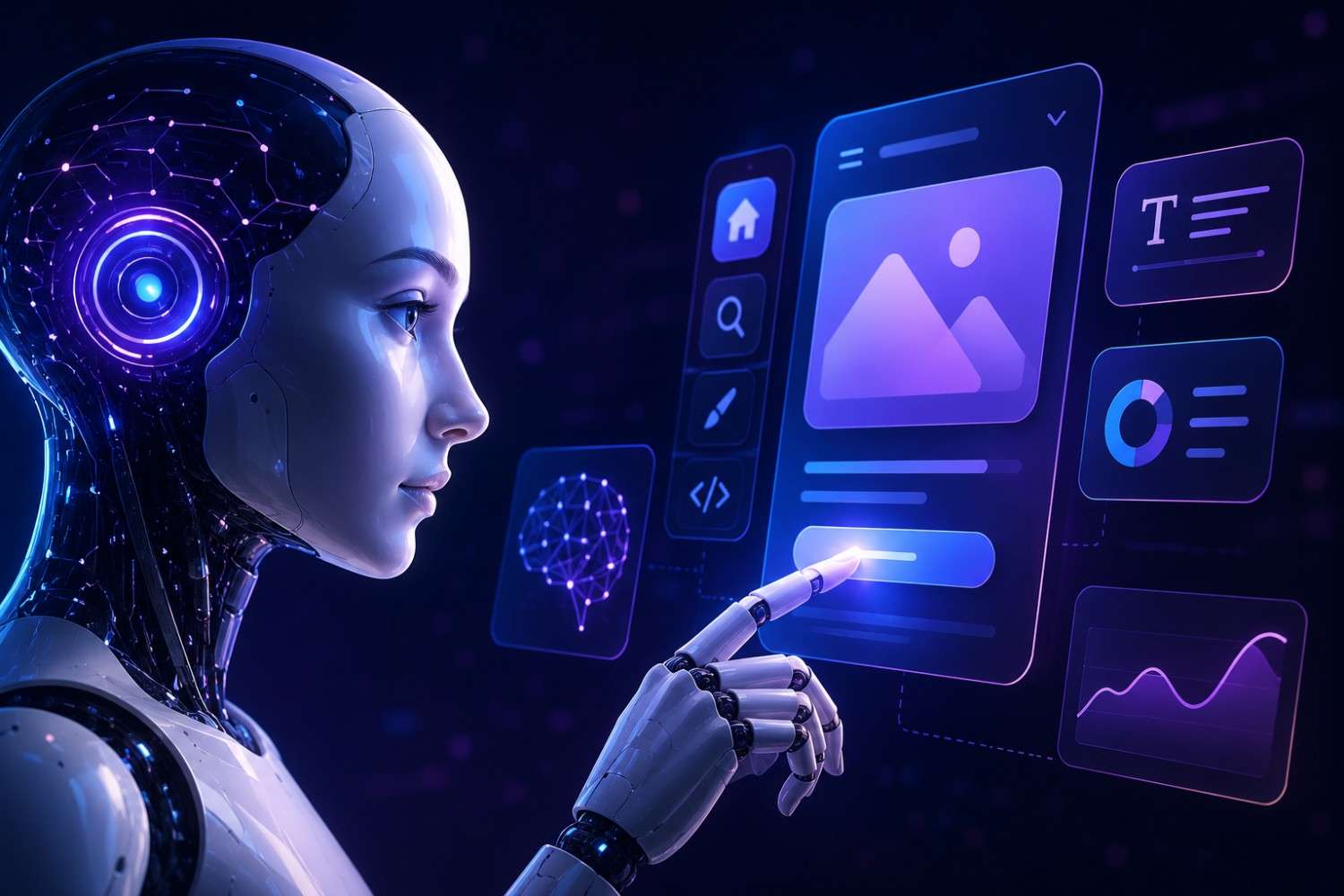
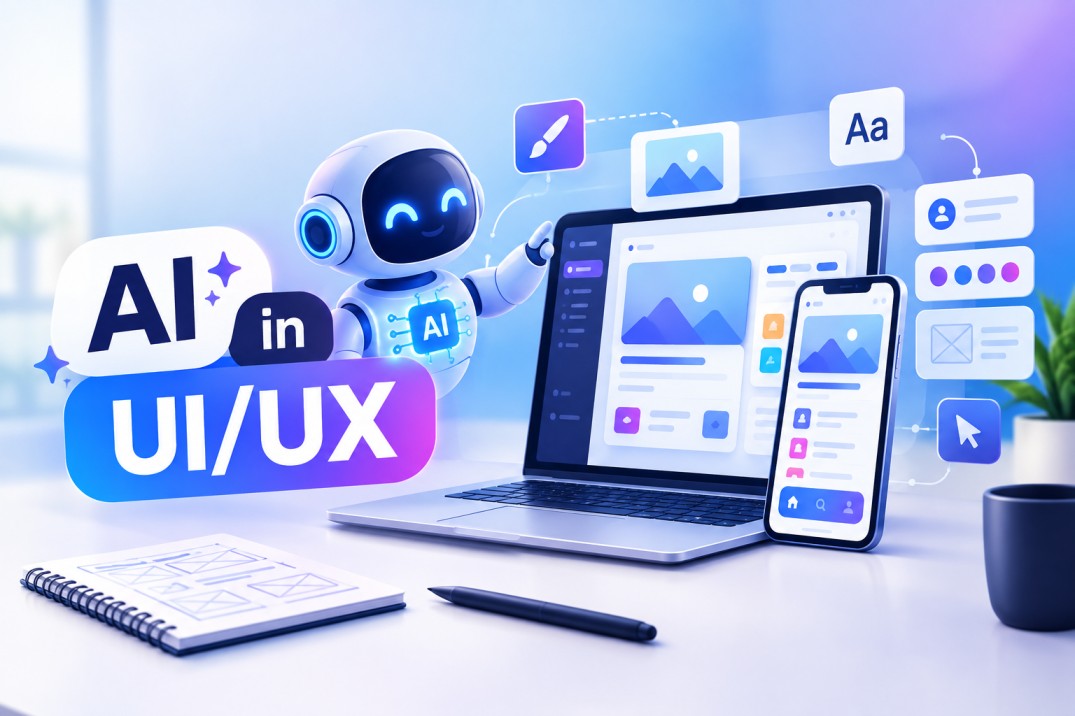
From startups to enterprises, players in the business world are increasingly turning to AI to automate their processes, guide decision making, and more. In the world of UI/UX design, this transformation is no less significant. AI currently assists numerous teams of UI/UX designers in drawing the insights and takeaways from vast troves of data, suggesting better enhancements to designs, and more. Keep reading to learn how AI is changing the the work that goes into designing UI/UX, what benefits AI has to offer UI/UX design efforts, and how your business can hop on this technological revolution for increased user retention.
Several aspects of AI have brought about significant strides in UI/UX design:
ML (Machine Learning): Machine learning quickens teams’ understanding of user patterns and their overall data. With this knowhow, UI/UX designers can craft custom interfaces that individual users prefer to respond to and engage with.
NLP (Natural Language Processing): With the rise of voice assistants and smarter chatbots, voice processing has become a major point of innovation efforts. Grand View Research estimates that the chatbot market worldwide will grow at a CAGR of 23.3% from 2023 to 2030 to reach 27.2 billion dollars. This speaks to teh growing demand for AI engines that can understand and quickly address spoken user requests and queries.
CV (Computer Vision): As VR/AR/MR/XR development scales, so too will the demand for experiences that are tailored to a user’s field of vision. Computer vision aids in image recognition, and with the growing AR market, it stands to reason that UI/UX design will feature more AR/VR aspects as time goes on.
AI analytics:Analytics are especially useful during the design research stage, and UX designers benefit greatly from quicker and more comprehensive AI data points than going out and researching all on their own. This will inform designers of the best kinds of user experiences they should model their next product on. While such AI powered analytics can map user patterns, preferences and issues with UX, it can also be used to anticipate future behavior based on historical data, which can then be used for customized UI/UX design.
Improvements in Personalization: While AI powered analytics gathered by a UI/UX development company in India can provide vast amounts of detailed user information that was previously hard to distil, AI can also help UI/UX designers create separate user profiles for each kind of user, wherein they can target said users with distinct and specific UI elements and UX techniques for an increasingly personalized approach. Natural language processing gains in AI can make web content more suited to a user’s communication style.
Accessibility Enhancements: With adaptive AI, users are presented with webpage content that gets altered in real time based on user preferences. This makes finding information easier than ever. Moreover, the increasing incorporation of AI assistants and chatbots ensures query resolution at any time of the day, rather than the previous dependence on human agents who are only available during fixed working hours. While being readily available, these chatbots can also process information in milliseconds, leading to faster responses, lower wait periods, and increased customer happiness. For visually impaired users, voice assistants offer an interface where more of the target audience gets their needs covered with zero issues, even to the point of browsing, selecting and ordering their desired products.
Design Process Automation: Certain aspects of UX design can be readily automated by AI tools like Figma, allowing design teams to focus on more important aspects of their work. Areas where AI can help teams include order tracking, slip generation, color & font recommendations, layout preparation, etc. A sharp eyed UI/UX development company can vet these processes before making any hasty decisions, using AI as a guide and not as an infallible decisionmaker.
Transformations in Prototyping: AI tools speed up the creation and subsequent modificiation of prototypes at scales faster than traditional UI/UX designers can do on their own. They also pore through historical data comprehensively to figure out what users will prefer next in terms of overall appeal and usability. With rapid prototyping, there will be scope for quicker feedback and faster iterations. Even junior or fresher designers can benefit from these AI tools that are designed to be used even by people who have very little knowledge of how to work on traditional tools.
Rapid Iteration of Designs: Thanks to the speed offered by machine learning systems in quickly analyzing and incorporating findings based on usage patterns and feedback, designers at a UI/UX development company in India can swiftly iterate the next versions based on AI recommendations without wasting valuable effort and time. Machine learning also results in effective A/B testing and better predictions, further improving user experiences.
It is unquestionable that UI/UX design is being upended by AI, with faster outputs, better understandings of users preferences, and more being just a few of the benefits. Improvements in personalization and accessibility features have both expanded and solidified target audiences and customer bases. By working with a software outsourcing company in India that knows their way around AI-assisted UI/UX design, your business’s UI/UX design troubles will be a thing of the past. Connect with us now to explore both our traditional and AI-powered services in design.
Q1: What is AI in UI/UX design and how does it work? A: AI uses ML and other advanced algorithms to provide and utilize vast amounts of user preference data and quickly craft appealing UI/UX mockups. AI is also used by UI/UX designers to handle mundane and repetitive workloads so they can focus on the more major aspects of design.
Q2: How does AI improve user experience in websites and apps? A: AI improves website and app UX in a variety of ways, including and not limited to creating highly responsive chatbot interfaces, personalized content recommendations and layouts, highly precise predictions based on user analytics, and more inclusive accessibility gains.
Q3: What are the best AI tools for UI/UX designers? A: Uizard is preferred for its ability to seamlessly convert hand-drawn sketches to digital ones; Figma AI allows for greater layout selections; UX Pilot analyze reviews and provide superior design analytics; and Framer AI can come up with prototypes and fully operative web designs from mere text prompts. A seasoned UI/UX development company knows when and how to utilize these tools for best results.
Q4: Can AI replace UI/UX designers in the future? A: A software development company in India or anywhere else cannot replace its UI/UX designers with AI, but AI can augment their work styles and increase their output. Designers are still needed to provide the right prompts, edit for the right look, and communicate with other stakeholders and clients to deliver the best experiences and layouts.
Q5: How can businesses use AI to improve UX design? A: Businesses can use AI to improve their UX design by hiring a UI/UX development company in India that knows how to leverage AI for faster analytics, individually personalized and widely accessible UI/UX designs, rapid and iterative prototyping, and design process automation.
Guaranteed Response within One Business Day!
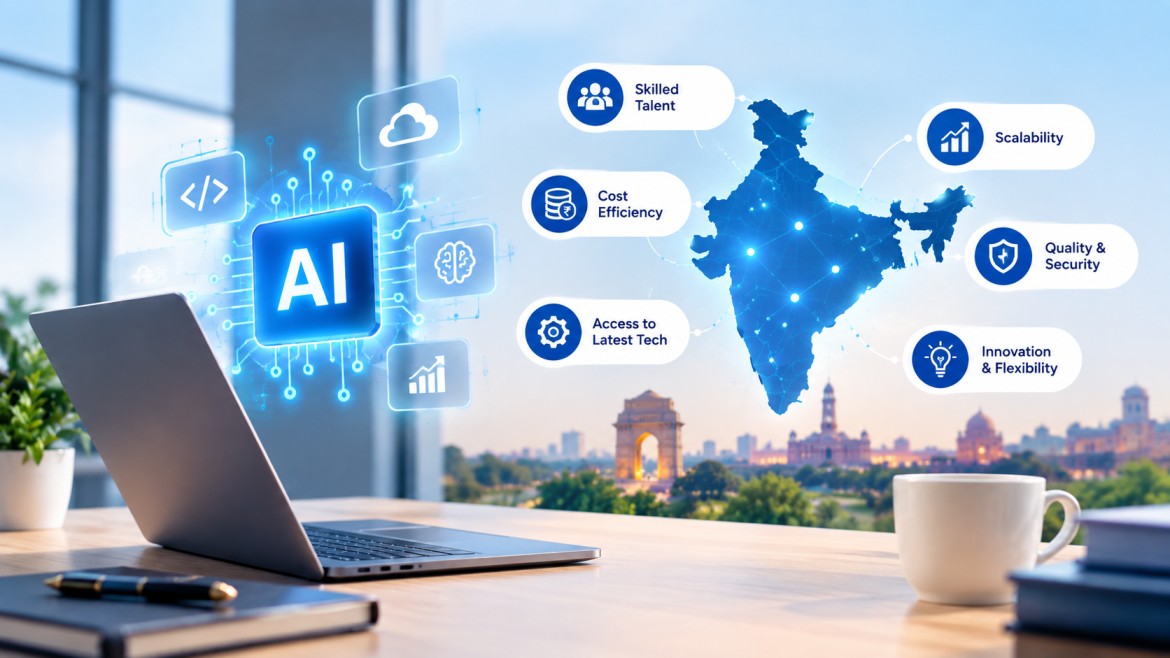
Why Businesses Are Choosing Software Outsourcing Companies in India for AI Development
The Role of Generative AI in Modern Software Outsourcing
The Role of AI in Modern UI/UX Design
How AI Is Transforming UI/UX Design and Development in 2026
What Is Agentic AI? A Complete Guide for Businesses

Guaranteed Response within One Business Day!