- October 19, 2026 2:34 pm
- by Manek
- October 19, 2026 2:34 pm
- by Manek
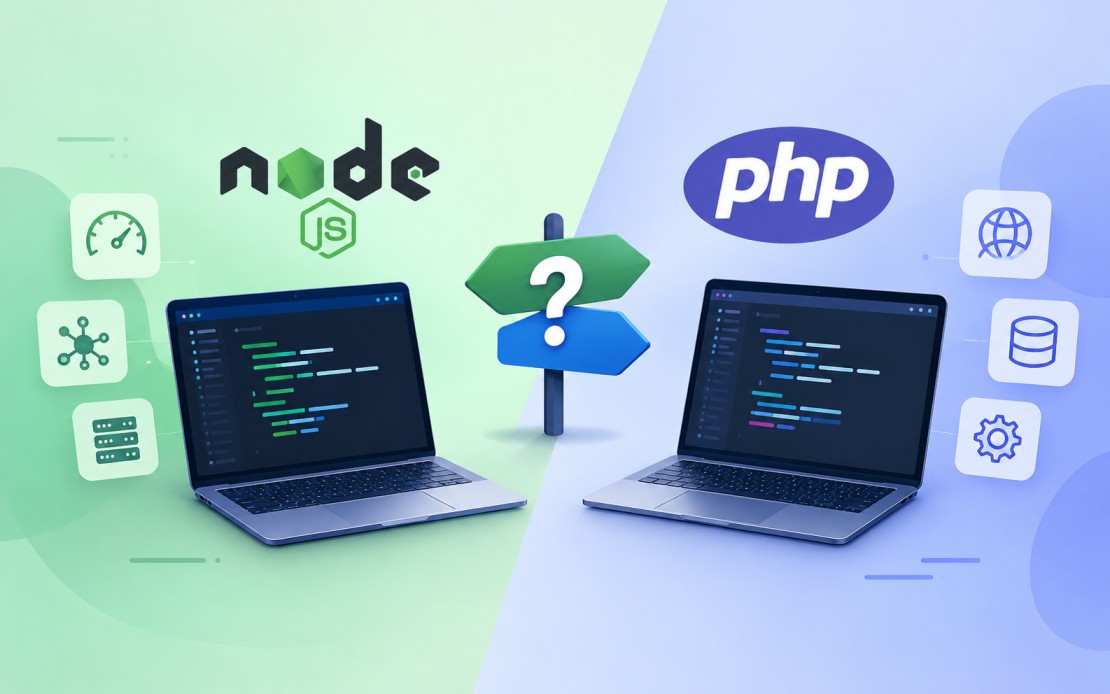
Choosing the wrong backend technology can add development complexity, integration problems, and maintenance costs as a product grows. Node.js suits I/O-intensive, real-time applications, while PHP works well for content-driven websites, established PHP platforms, and projects that rely on mature frameworks.
The best choice depends on application requirements, developer expertise, infrastructure, integrations, and long-term maintenance. Both are proven technologies, so the decision comes down to fit rather than quality.
A startup building a live collaboration tool faces different trade-offs than a retailer running a large online store. This guide compares both technologies through practical project scenarios, so you can decide before you invest in development or hire a team.
Node.js is a runtime that runs JavaScript on the server. It uses an event-driven, non-blocking I/O model, so the server starts a task such as a database query or API call and handles other requests while it waits for the result. This lets one application manage many concurrent I/O operations efficiently.
That model fits real-time communication and event-based systems. Live dashboards, notification systems, chat platforms, and collaborative applications are typical examples, along with API development, streaming-related services, and suitable SaaS products. A shared JavaScript language also lets frontend and backend teams work with the same tooling.
Node.js does not automatically make an application faster or more scalable. Performance depends on the workload, implementation, dependencies, and architecture, and database design, caching, and infrastructure often matter as much as the runtime.
A Node.js web development company can review your workload and architecture before you commit to a build. If you plan to hire Node.js developers in India, check experience with asynchronous design, API security, and production monitoring.
PHP is a server-side language that powers web applications. It handles requests, forms, sessions, and database operations. Mature frameworks such as Laravel and Symfony add structure, security features, and proven patterns for maintainable code.
PHP fits content management systems, content-heavy websites, e-commerce platforms, business portals, and database-driven applications. Corporate websites, CMS-based platforms, online stores, customer portals, and internal business tools all sit comfortably in its ecosystem. It also runs on common hosting environments and follows established deployment workflows.
PHP supports scalable applications when teams design and build them properly. Framework selection, hosting, database design, security practices, and maintenance shape both project cost and performance. PHP is not inherently cheaper, slower, or less scalable than Node.js, because the implementation decides the outcome.
PHP makes the most sense when you already run a PHP application, employ experienced PHP developers, or rely on PHP-based infrastructure. Rewriting a working system in another language adds risk and does not guarantee better results.
Consider a PHP web development company in India for custom PHP development, legacy application support, framework-based builds, or ongoing maintenance. If you plan to hire PHP developers in India for long-term work, confirm their framework experience, code-review practices, and a clear approach to security updates.
The two technologies differ most in language, runtime, and how they handle concurrent work. Node.js runs JavaScript on the Node.js runtime and uses an event-driven, non-blocking model. PHP runs on a PHP interpreter behind a web server and typically handles each request independently, which teams scale through server and process configuration.
Real-time features and content platforms show a clear contrast. Node.js fits live updates and persistent connections well, while PHP can support real-time features with added tooling. PHP also offers a wide range of mature CMS and e-commerce platforms, and Node.js has its own ecosystem of packages and frameworks.
Frameworks and existing systems also shape the choice. Node.js teams commonly work with Express, NestJS, and npm packages, while PHP teams rely on Laravel, Symfony, and Composer packages. Node.js suits new builds and JavaScript-centered stacks, and PHP suits projects where PHP code or infrastructure already exists.
Hiring, hosting, and long-term cost need a practical look as well. Both technologies have large talent pools, so check framework depth for either one. Node.js needs a runtime and process management, PHP runs on widely available hosting, and total cost for both depends on dependency upkeep, framework updates, architecture, and code quality.
Six criteria matter most when you choose between them.
Choose Node.js when real-time interactions, I/O-intensive workloads, or a JavaScript-centered development stack align with the project. Choose PHP when its frameworks, CMS ecosystem, existing infrastructure, or content-driven requirements offer a practical fit.
Evaluate both options when requirements overlap. Never select a technology only because it is newer, more popular, or seems cheaper.
Node.js and PHP can also coexist in one application when the architecture justifies it. That setup adds integration and maintenance complexity, so weigh it carefully.
Vofox Solutions helps businesses build web applications on the technology that matches their project goals, including Node.js and PHP. Contact Vofox Solutions to discuss your requirements and identify the right technology stack for your next project.
Node.js is a JavaScript runtime for server-side development, while PHP is a language with strong server-side web development capabilities. Node.js uses an event-driven, non-blocking model, while PHP typically handles each request independently. Both offer mature ecosystems and strong framework support.
Neither technology is universally better for web development. Real-time requirements, existing systems, framework needs, team expertise, and workload decide the better fit. Node.js suits event-driven products, while PHP suits content-driven and established platforms. Match the technology to the project.
Choose Node.js for real-time applications, event-driven systems, I/O-intensive APIs, and projects that benefit from a shared JavaScript ecosystem. Chat platforms are a common example. When you hire Node.js developers in India, confirm asynchronous design and API security experience.
Choose PHP for content-driven websites, CMS platforms, e-commerce stores, business portals, and projects with existing PHP systems. When selecting a PHP web development company in India or hiring PHP developers, confirm their framework and security experience.
Yes, Node.js and PHP can work together when the architecture justifies it. A common setup pairs a PHP application with a Node.js service for real-time features. A Node.js web development company can plan the split and its maintenance.
Guaranteed Response within One Business Day!
When to Choose Node.js and When to Choose PHP for Your Project

How to Choose the Best Flutter App Development Company for Your Business

Key Benefits of Hiring a Flutter App Development Company in India

How AI Agents Are Creating New Opportunities for Software Outsourcing Companies

Why Businesses Are Choosing Software Outsourcing Companies in India for AI Development

Guaranteed Response within One Business Day!